

Option Trading by Rohit yadav

How to Become Consistently Profitable in Options Day Trading ( Intraday Options

1. Avoid ATM & OTM Options for Long-Term Consistency

ATM and OTM call/put options are generally not profitable in the long run. Their deltas (0.40–0.55 range) do not move in sync with Nifty price action. Because of this:

  • Option premiums move too fast and become highly impulsive.
  • Manual trading makes it difficult to exit exactly at target or stop-loss.
  • When the market moves against you, losses rise quickly and psychologically it becomes difficult to exit.
  • High risk–reward ratio means in Option more volatility and more emotional decision-making.

2. Trade Futures Using Deep ITM Options

Instead of trading ATM/OTM, use Deep ITM options as a substitute for futures.

  • You can trade with lower capital compared to Nifty futures.
  • Deep ITM behaves almost like futures but with lower risk.
  • Price moves more smoothly, reducing emotional pressure.

3. Choose Deep ITM Options With Delta 0.60, 0.70, 0.80, 0.90 +

These deltas move almost point-to-point with Nifty, allowing:

  • Better accuracy in targets
  • Lower chances of hitting stop-loss
  • A smoother and more predictable move that matches Nifty candles

Take minimum 2-strike deep ITM options from the ATM  for both calls and puts so that the price movement aligns with the Nifty chart.


4. Set Targets & Stop-Loss Based on Nifty Price Action

If your option delta is 0.6–0.9:

  • Keep your profit target 3–4 points below Nifty’s actual price target.
  • Place your stop-loss 3–4 points above or below the Nifty candle structure.
  • Use candle logic (3–4 bars above/below) to place stop-loss safely.

This ensures controlled risk and better reward consistency.


5. Trade Only in High-Probability Sessions

Avoid full-day trading. Focus on these time windows:

  • Morning Session: 9:15 AM – 11:00 AM
  • Afternoon Session: 1:30 PM – 3:00 PM ( AS The UK Market Open At 1:30 PM )

Avoid 11:00 AM – 1:00 PM, as the market usually moves sideways during this period.


6. Avoid Counter-Trend Trades

Do not trade against the trend.

  • If the market is bullish, avoid taking put (counter-trend) trades.
  • If the market is bearish, avoid taking call (counter-trend) trades.

Options premiums move strongly in the direction of the trend. Counter-trend trades reduce your long-term profitability and increase losses.


7. Option Chain Analysis for Support & Resistance

Use Option Chain data to identify real support and resistance levels:

  • Highest Call OI → Major resistance
  • Highest Put OI → Major support

Also check Day OI change:

  • Call unwinding → Bulls gaining strength
  • Put unwinding → Bears gaining strength

Analyze the OI shifts during the last 5, 15, and 30 minutes to understand short-term trend direction.


8. Use PCR Ratio to Judge Trend Strength

PCR (Put–Call Ratio) helps identify market sentiment:

  • Rising PCR (above 0.6–0.8) → Market turning bullish
  • Falling PCR → Bearish pressure increasing
  • PCR around 1 → Market in a range or sideways; avoid trading

PCR should support your trend bias before you take a trade.


9. Do Not Enter in the First 5 Minutes

Avoid entering trades during the first 5 minutes of the market open because volatility is unpredictable.

Also:

  • Do not take advance entries before Nifty breaks out.
  • Options  Premium break out faster than Nifty Move , so wait for confirmation in the Nifty chart first.
  • Enter after Nifty confirms, not before.

10. Follow Your Own Strategy – Avoid Overtrading

  • If you have a strategy with more than 60% accuracy, follow it strictly without deviation.
  • Limit yourself to 2 trades per day (maximum 3 only if one setup fails).
  • Your goal should be to capture 30–40 points from the Nifty move  in  every two sessions combined. But remember — you don’t need to trade all 5 days of the week.
  • Avoid sideways marketsbecause theta decay kills option premiums, and price movement becomes limited.
  • Do not overtrade. Unnecessary trades reduce accuracy and increase the chances of losses.

Disclaimer: This content is for informational and educational purposes only and should not be considered as financial advice. Investing and trading in the stock market involve risks, and you should always consult a registered financial advisor before making any investment decisions. We do not accept any responsibility for losses that may arise from acting on this information.

RK Alpha Trading

Today’s Market Recap and Tomorrow’s Outlook: What Traders Should Watch

View for Tomorrow

Date: November 4, 2025

Quick summary: Indian markets closed lower today as profit-booking and foreign selling weighed on indices, even after a few strong corporate results.


Session 1 — What happened today

  • Nifty / Sensex: Market ended lower — Nifty finished near 25,598 and Sensex down over 500 pointsat close.
  • Market mood:Most sectors were in the red — IT, metals and mid/small-caps were among the laggards. Heavyweights trimmed gains.
  • Institutions: FIIs were net sellers today (about ₹1,067 crorenet sell) while DIIs bought. That mix added to risk-off sentiment.

Session 2 — Top 8 headlines (today) — what happened, why it matters, and the likely impact

1. Bharti Airtel posts strong results / stock outperforms today.

  • What: Airtel shared good numbers; stock gained.
  • Why it matters: Large-cap telecom strength helps index support and investor sentiment in the services/tech space.
  • Impact: Positivefor telecom and some large-cap index weighting; helps limit downside.

2. Titan reports robust quarterly performance — stock up.

  • What: Titan’s results beat expectations.
  • Why it matters: Consumer discretionary recovery signals demand revival; domestic consumption story remains relevant.
  • Impact: Positivefor consumer discretionary and select midcaps.

3. Profit-booking in financials & IT drags market.

  • What: Banks and IT names saw selling after prior rallies.
  • Why it matters: Financials and IT carry large weight in indices — profit-booking there pulls the index lower quickly.
  • Impact: Negativefor index near-term; caution for short-term traders.

4. FIIs net sellers (daily outflow) while DIIs buy.

  • What: Foreign funds sold about ₹1,067 crore today; domestic institutions were net buyers.
  • Why it matters: FII flows often drive bigger directional moves; their selling raises volatility risk.
  • Impact: Negativefor near-term flows but DIIs can provide short-term support.

5. Weakness in metals & mid-/small-caps.

  • What: Metals and smaller-cap indices closed lower.
  • Why it matters: Profit-taking in cyclical sectors often signals rotation out of risk-on trades.
  • Impact: Negativefor mid/small-cap portfolios; defensive sector allocation may work better.

6. Hero MotoCorp sales fall; stock under pressure.

  • What: Hero reported a drop in domestic sales — stock declined.
  • Why it matters: Auto demand softness impacts supplier chain and consumer confidence indicators.
  • Impact: Negative for auto stocks; watch related names for underperformance.

7. Select corporate earnings mixed (Arvind Smartspaces, JK Paper weak; Hitachi Energy India strong).

  • What: Some companies reported steep profit declines, others beat estimates.
  • Why it matters: Mixed earnings widen dispersion — stock-specific moves will matter more than index momentum.
  • Impact: Mixed— opportunities in stock-picking; index may stay rangebound.

8. Global cues & Fed uncertainty keep traders cautious.

  • What: US Fed outlook and global markets were jittery, affecting Asia including India.
  • Why it matters: Macro cues (rates, dollar, crude) influence flows into emerging markets like India.
  • Impact: Neutral-to-Negative— until clarity arrives, expect cautious trading and low conviction moves.

Session 3 — View for tomorrow

1) Nifty — possible range & key levels (tomorrow):

  • Possible trading range: 25,500 — 25,700 (expect oscillation inside this band).
  • Important support: 25,500 — 25,450 (if this breaks, more downside likely).
  • Important resistance: 25,800 — 25,950 (sustained move above this could reopen upside).

2) Sectors to watch (tomorrow):

  • Watch: Banks / Financials — heavyweights that can move the index quickly (keep an eye on any bank-specific news).
  • Watch: IT — profit-booking may continue; any guidance from large IT companies will matter.
  • Watch: Consumer / Jewellery (Titan)— earnings strength could support consumer names.
  • Watch: Metals & Autos— weak today; good to monitor if buying interest appears at lower levels.

3) Stocks to keep an eye on (not advice — just watchlist):

  • Bharti Airtel — strong result; could lead sector strength.
  • Titan Company— positive quarterly; acts as sentiment proxy for consumer demand.
  • Select banks & large-cap IT names— monitor for guidance and intraday flows.

Disclaimer: This content is for informational and educational purposes only and should not be considered as financial advice. Investing and trading in the stock market involve risks, and you should always consult a registered financial advisor before making any investment decisions. We do not accept any responsibility for losses that may arise from acting on this information.
Rk alpha Trading

Top 10 news items 6 October 2025 that matter for Indian markets.

1) Sensex & Nifty jump — IT and private banks lead the rally

a) Reason — Strong buying in large IT names and private banks lifted the benchmarks today.

b) Impact — The index rise was broad-based but led by sector rotation into tech and financials, improving market sentiment and lifting mid-cap interest.

c) Takeaway — Watch IT & bank stock moves for short-term momentum; quality large-caps often lead the next leg up.


2) RBI likely intervenes to keep rupee near record low

a) Reason — Heavy dollar demand from importers and market FX flows put pressure on the rupee; the central bank stepped in to smooth volatility.

b) Impact — A weaker rupee raises input costs for import-heavy firms (oil refiners, some retailers) and can add to inflation risk; RBI intervention can tighten liquidity temporarily.

c) Takeaway — Beginners should watch USD/INR moves — big swings can affect corporate earnings and cause short-term market gaps.


3) DIIs buy heavily while FIIs remain cautious

a) Reason — Foreign investors are still selective (net selling in parts), while domestic institutional investors bought into weakness to pick quality names.

b) Impact — Flow-driven market behavior: DIIs can prop up prices short-term, but persistent FII caution can limit sustained rallies. Stocks with high FII ownership may stay volatile.

c) Takeaway — Track daily FII/DII data — if DIIs keep buying, it can support dips; if FIIs reverse to buys, momentum can strengthen.


4) Adani Enterprises raises funds via private bond placement

a) Reason — Adani tapped a private bond issue after a gap, raising funds via a rated corporate placement to mutual funds and institutions.

b) Impact — Raises liquidity for the group and shows access to debt markets; may calm some investors but keep group-specific volatility until all regulatory questions are settled.

c) Takeaway — For beginners: corporate debt moves can affect stock sentiment — watch how markets react to use of proceeds and credit spreads.


5) Tata Capital IPO opens — large IPO of the year draws attention

a) Reason — The Tata Capital public offering started today and is the biggest IPO window this quarter, attracting institutional and retail interest.

b) Impact — Big IPOs can pull foreign and domestic capital into primary markets and give short-term support to equities and the rupee via subscription inflows. Early subscription rates were mixed on day one.

c) Takeaway — If you’re new to IPOs, read the prospectus and avoid chasing first-day spikes; consider allocation size and long-term fundamentals.


6) Global risk appetite helped — US markets rally on AI / chip news

a) Reason — Positive global cues, led by stronger US tech/AI and chip sector headlines, boosted risk appetite across markets.

b) Impact — India’s market benefited from the spillover — especially tech/IT names — but global moves can reverse quickly if new data or geopolitics change.

c) Takeaway — Beginners: global headlines matter — a strong global session often helps local rallies; keep an eye on US close for clues.


7) IT stocks lead sectoral gains (TCS, TechM, Infosys among top performers)

a) Reason — Positive flows into software names today and selective buying on expectation of better near-term outlook.

b) Impact — IT sector outperformance can lift index levels and shift investor focus back to export-earnings plays; but watch margin commentary given ongoing cost and visa concerns.

c) Takeaway — Check company updates on margins and onsite/offshore mix before adding exposure.


8) Crude & commodity backdrop — Brent around mid-$60s

a) Reason — Brent crude traded around the mid-$60s, affecting refinery margins and global inflation expectations.

b) Impact — Stable-to-lower crude helps refiners’ export margins and eases fuel-cost pressure for consumers; sudden spikes would hit input-heavy industries.

c) Takeaway — Watch oil price moves — refiners and oil marketing companies are directly impacted; a fall in crude is generally supportive for broader consumption.


9) FII selling in 2025 remains a structural theme

a) Reason — Year-to-date foreign selling has been large, reflecting global rebalancing and macro caution from overseas funds.

b) Impact — Persistent FII outflows can cap multiple expansion and make the market sensitive to foreign flow reversals; domestic flows often offset but unevenly.

c) Takeaway — Beginners: focus on quality companies with strong balance sheets when flows are uncertain — they handle outflows better.


10) Banking sector shows mixed but supportive action (HDFC Bank, SBI notable)

a) Reason — Select private and public banks saw buying as investors assessed credit outlook and RBI commentary; some names still face profit-taking.

b) Impact — Banking-led gains can underpin the index; however, intra-bank divergence means stock-specific news (asset quality, NIMs) will drive returns more than sector-level trends.

c) Takeaway — Watch bank-specific updates and RBI signals — these determine which bank stocks are worth holding or trading.


Disclaimer: This content is for informational and educational purposes only and should not be considered as financial advice. Investing and trading in the stock market involve risks, and you should always consult a registered financial advisor before making any investment decisions. We do not accept any responsibility for losses that may arise from acting on this information.

Top 10 News Of The day

October 2 Market Brief: 10 Headlines That Could Shape Tomorrow’s Trading

Below are 10 top news items (today) that matter for Indian markets.


1) RBI MPC: repo unchanged at 5.5%; GDP forecast raised to 6.8%

a) Reason — The Reserve Bank held the repo rate steady and signalled a neutral stance while upgrading its GDP outlook, reflecting easing inflation and hopes of growth momentum.

b) Impact — Banks, NBFCs and rate-sensitive stocks reacted positively to the ‘no shock’ outcome; bond yields eased and the expectation of future rate cuts lifted sentiment in fixed income. The central bank’s supportive tone helps consumer credit, housing demand and sectors dependent on borrowing.


2) Markets closed today for Gandhi Jayanti / Dussehra (trading holiday)

a) Reason — October 2 is a national holiday (Gandhi Jayanti + Dussehra observances), so equity, currency and debt markets are shut for the day.

b) Impact — No intraday trading in onshore markets; global events over the holiday (US moves, oil swings, Fed comments) will show up as gaps when markets reopen — expect higher volatility on Friday open. Options expiry / settlement deadlines may be pushed or recalculated around holiday schedules.


3) FIIs remain cautious / net selling trend continues

a) Reason — Foreign institutional investors have been selling because of global policy uncertainty (rate/path worries, trade/tariff headlines) and are being selective on where to put money in India.

b) Impact — FII outflows put pressure on large caps and overall market momentum; DIIs (domestic institutions) sometimes buy the weakness, creating short-term choppiness. Stocks with heavy FII ownership see larger moves.


4) RBI pushes rupee internationalisation ideas while currency stays vulnerable

a) Reason — RBI announced steps to promote rupee use in cross-border trade (loans in rupee to neighbours, reference rates, use of vostro balances), aiming to reduce dollar reliance even as the rupee has been under pressure.

b) Impact — In the near term, the rupee can still be volatile (import demand, FX flows). Over time, these measures may lower transaction costs for exporters/importers and give corporates more FX options — but benefits will accrue slowly. FX-sensitive sectors (oil refiners, importers, some retail segments) are the most affected.


5) IT sector still under pressure after U.S. visa changes and scrutiny

a) Reason — U.S. policy changes (including higher H-1B fee proposals and increased scrutiny) plus questions from some US lawmakers are raising cost and compliance worries for Indian IT firms.

b) Impact — Large IT exporters (TCS, Infosys, Wipro) face margin risk if onsite costs rise or client sourcing shifts; some firms may accelerate offshore/automation strategies. The sector could see earnings revisions or cautious guidance in near-term results.


6) Abu Dhabi’s IHC to invest ~ $1 billion for 43.5% stake in Sammaan Capital

a) Reason — A big foreign investor (IHC) agreed to buy a large stake in Sammaan Capital (formerly a housing finance name), signalling strong private investment appetite for Indian financial assets.

b) Impact — Positive for financials/nbfc space sentiment — large inbound institutional deals often lift investor confidence in the banking/ housing finance segment and can trigger re-rating for similar names. It also shows availability of foreign capital even when FIIs broadly stay cautious.


7) India–China direct flights set to resume later this month — trade & tourism cue

a) Reason — Governments have agreed to restart direct air connections, reflecting improving diplomatic ties and a push to normalise trade/people flows.

b) Impact — Easier connectivity helps trade, tourism and logistics over time. Sectors such as airlines, hospitality, and exporters that rely on China supply-chains may see positive sentiment if normalisation holds. It’s more of a medium-term positive rather than an instant market mover.


8) India’s diesel exports to Europe surged in September — refiners benefit

a) Reason — Indian refiners ramped exports to Europe (record diesel volumes) because of attractive refining margins and maintenance in European refineries.

b) Impact — Positive for refiners and oil-marketing companies — stronger refining margins raise near-term earnings. But a rise in exports can tighten local product availability and affect domestic fuel spreads; watch inventory and local demand around festivals.


9) Carlsberg India commits ₹1,250 crore capex across states

a) Reason — Carlsberg announced a multi-year investment plan to expand breweries and distribution — a bet on premiumisation and stronger beverage demand in India.

b) Impact — Positive for consumer discretionary, packaging, logistics and local suppliers; signals multinational confidence in India’s consumption story even when markets are uncertain. Such capex usually unfolds over quarters and lifts supplier revenues too.


10) Global markets & Fed-cut expectations: mixed signals; risk of volatility when markets reopen

a) Reason — Global markets are oscillating as investors debate the timing of U.S. rate cuts; headline moves in US stocks, gold and bond yields feed into EM flow decisions for India.

b) Impact — If global yields fall (more Fed-cut bets), EM assets like Indian equities can attract flows; but if the dollar strengthens or risk-off returns, India will feel outflows and rupee weakness. With Indian markets closed today, any big US move will create volatility when markets open.


Disclaimer: This content is for informational and educational purposes only and should not be considered as financial advice. Investing and trading in the stock market involve risks, and you should always consult a registered financial advisor before making any investment decisions. We do not accept any responsibility for losses that may arise from acting on this information.

NIFTY_2025-09-29_00-06-28

Nifty 50 Trade Setup for September 29, 2025 & Next Week – Key Things to Know Before Market Opens

Nifty 50 Market Outlook for September 29, 2025

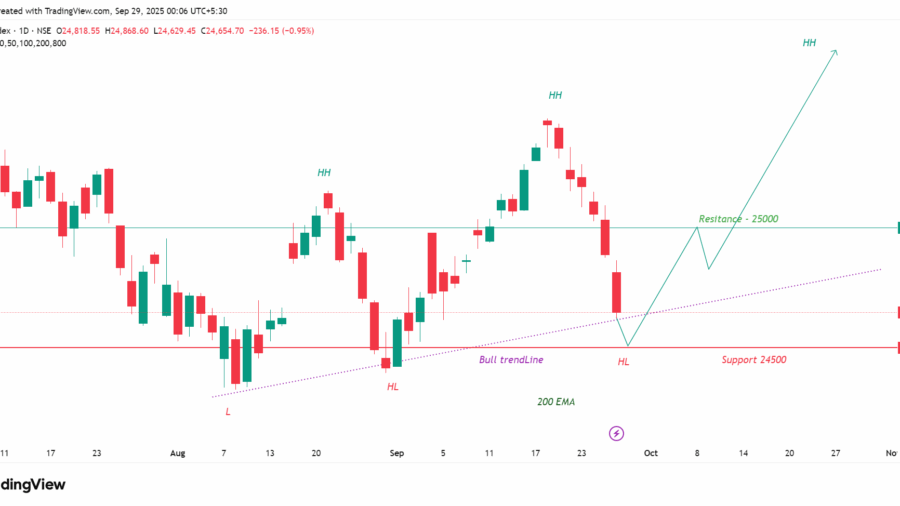
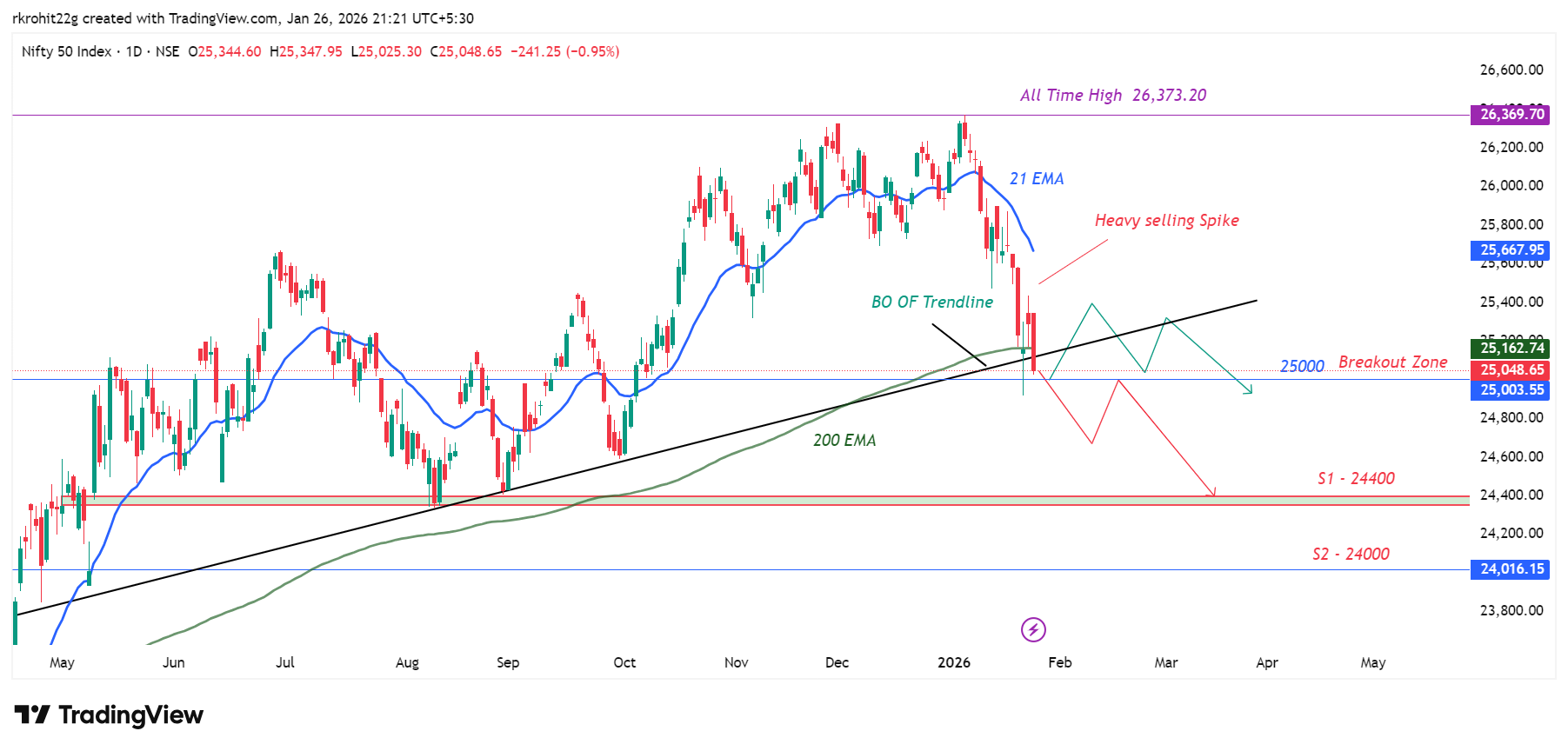
The Nifty 50 ended last week under continued selling pressure, with the index slipping nearly 1 percent on September 26 and losing 2.65 percent for the week. This marked the sixth straight session of weakness, highlighting strong bearish sentiment across both technical and momentum indicators.

The index touched the 24,600 mark, which aligns with the 78.6% retracement level of the recent rally. This area now serves as a crucial support zone that could decide the near-term direction of the market.

Key Levels to Watch

  • Support Zones:
    Immediate support is seen at 24,600, followed by 24,400–24,300 if the decline extends. The 24,500 zone also remains important, as a successful retest and reversal from this level could help the index resume its broader bullish structure. On the daily chart, the pattern continues to show Higher Highs (HH) and Higher Lows (HL), and the market is currently awaiting the formation of the next Higher High to confirm the continuation of the trend.
  • Resistance Zones:
    On the upside, resistance is expected in the 24,800–24,900 zone. A decisive close above these levels will be required for bullish momentum to return with strength.

Market Sentiment

While the trend remains under pressure in the short term, the recent steep fall increases the possibility of a bounce-back. However, the sustainability of any recovery will be crucial—if buyers fail to defend the 24,600–24,500 support region, the market could shift toward a deeper corrective phase.

In summary, the market’s next move hinges on how Nifty behaves around the 24,600–24,500 support cluster. Holding above this range could revive bullish momentum, but a breakdown may open the door for further downside toward 24,300.


Nifty Open Interest Analysis – September 29, 2025

Call Options Data

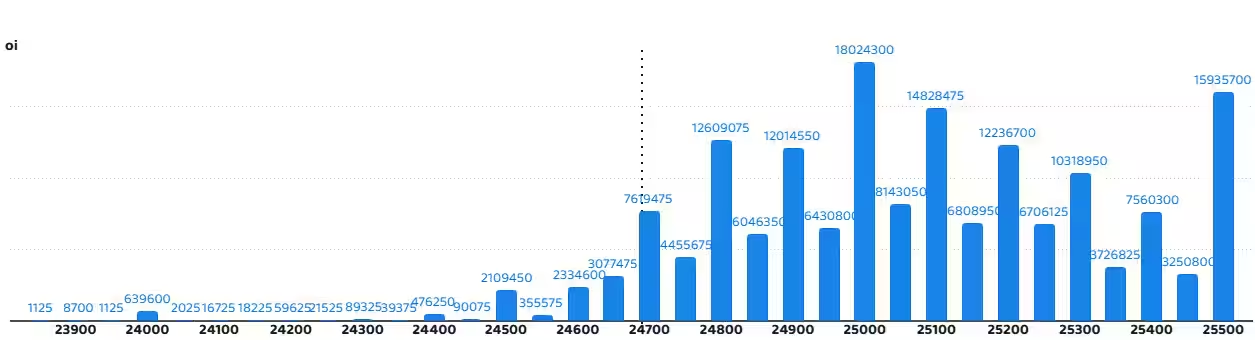
  • The maximum Call OI is concentrated at the 25,000 strike (1.8 crore contracts), making it the most significant resistance level in the near term.
  • This is followed by the 25,500 strike (1.59 crore contracts) and the 25,100 strike (1.48 crore contracts), indicating additional supply zones where sellers are active.
  • Fresh Call writing was most notable at the 24,800 strike (1.07 crore contracts added), suggesting traders are building positions expecting Nifty to face resistance near this zone.
  • Additional writing was seen at 24,900 (75.83 lakh contracts) and 24,700 (62.41 lakh contracts).
  • On the other hand, Call unwinding was observed at the 25,400 strike (-21.24 lakh contracts), followed by 25,450 (-14.63 lakh) and 25,350 (-11.03 lakh), showing that traders are reducing positions at higher levels, hinting at a lack of confidence in a sharp breakout.

Put Options Data

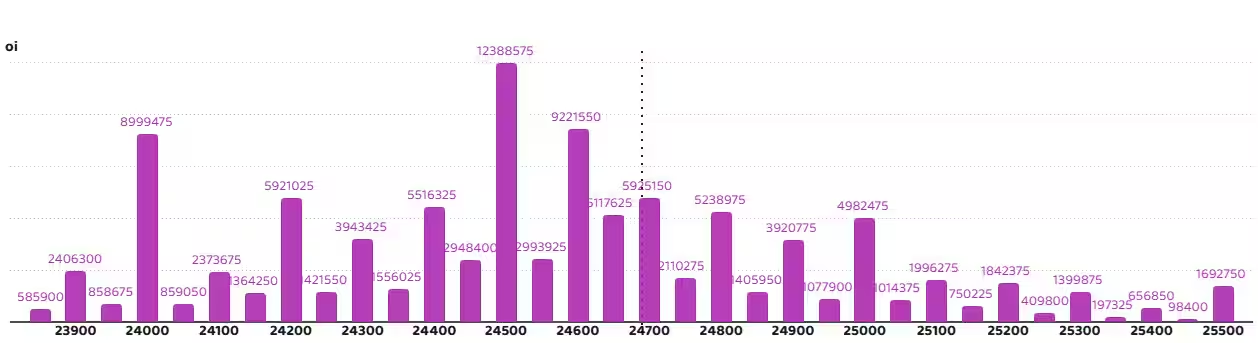
  • On the downside, the 24,500 strike holds the highest Put OI (1.23 crore contracts), acting as a key support level for the index.
  • This is followed by the 24,600 strike (92.21 lakh contracts) and the 24,000 strike (89.99 lakh contracts), which further strengthen the support base.
  • Put writing was strongest at 24,500 (+41.98 lakh contracts), showing traders’ confidence in defending this level.
  • Additional writing was recorded at 24,600 (+38.91 lakh contracts) and 24,650 (+29.38 lakh contracts), reinforcing the support zone.
  • Put unwinding was highest at 24,900 (-45.61 lakh contracts), followed by 25,000 (-43.26 lakh contracts) and 24,800 (-25.68 lakh contracts), reflecting weakening bullish bets at higher strikes.

Market View Based on OI Analysis

  • Support Zone: The 24,500–24,600 range is emerging as the strongest support, with heavy Put OI and fresh writing. Unless this zone is broken, downside risks remain limited in the short term.
  • Resistance Zone: On the upside, resistance is firm around 24,800–25,000, where significant Call OI and fresh writing are concentrated.
  • Trading Implication:
  1. If Nifty sustains above 24,600, it may consolidate and attempt a move toward 24,800–25,000.
  2. A breakout above 25,000 could open the way toward 25,100–25,500, but the heavy Call OI here suggests it won’t be an easy move.
  3. On the downside, if Nifty slips below 24,500, the next support lies near 24,300–24,000, which could invite stronger selling pressure.

Put-Call Ratio (PCR) Update

The Nifty Put-Call Ratio (PCR) slipped to 0.63 on September 26, the lowest since July 28, down from 0.68 in the previous session.

The PCR is an important sentiment indicator:

  • A high PCR (above 0.7 or near 1.0) means traders are adding more Puts than Calls, which usually signals bullish sentiment as participants expect the market to stay supported.
  • A low PCR (below 0.7 or closer to 0.5) shows more Call positions being built compared to Puts, reflecting bearish sentiment as traders anticipate resistance or downside pressure.

With PCR now at 0.63, the data suggests that the market mood is leaning bearish in the short term.


India VIX Update

The India VIX, which reflects expected market volatility, rose by 5.96% to 11.43. It has now moved back above its short- and medium-term moving averages.

This rise in VIX signals increasing caution in the market, showing that traders and investors expect more volatility ahead. For bulls, it suggests being careful as the risk levels are starting to rise.


Disclaimer: This content is for educational purposes only and not financial advice. Options trading carries risk. Consult a registered advisor before making any trades. We are not liable for any losses.

nifty 50 Charts

Nifty 50 Trade Setup for September 22, 2025 & Next Week – Key Things to Know Before Market Opens

Nifty 50 Market Outlook – 22nd September 2025

Market View

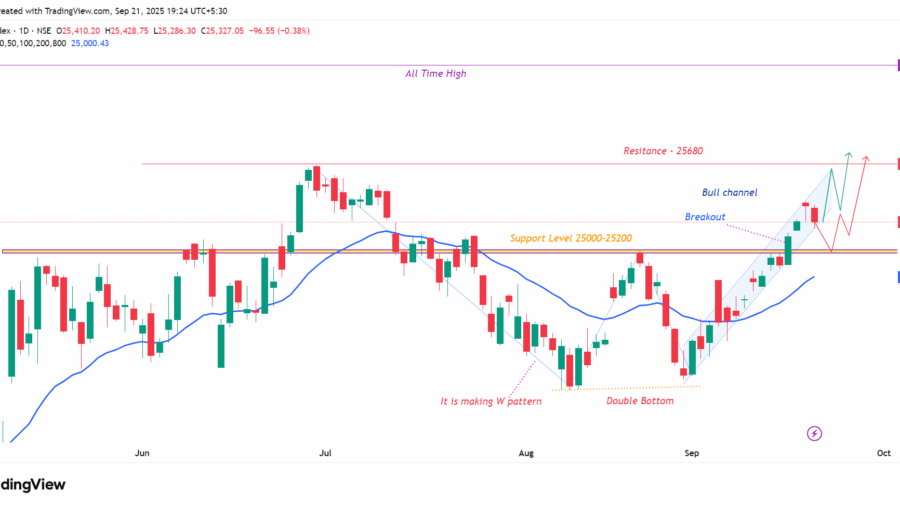
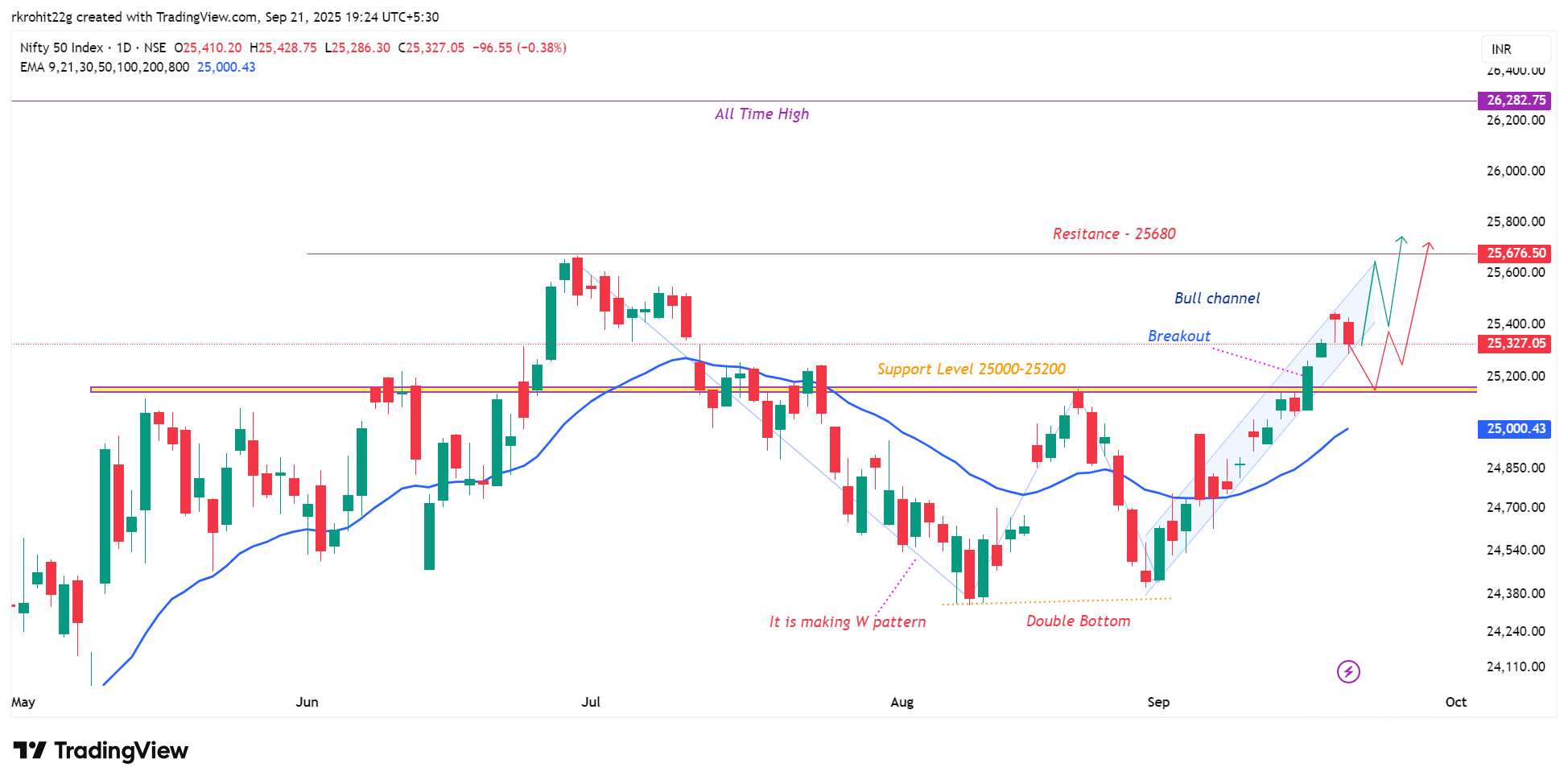
  1. Overall Trend – Nifty continues to trade within a bullish channel, maintaining its broader upward momentum. Despite short-term volatility, the underlying trend remains positive.
  2. Key Resistance – The index is likely to challenge the 25,680 level, which is emerging as the next major hurdle on the upside. A breakout above this level could accelerate bullish momentum further.
  3. Crucial Support Zone – The 25,000 level is acting as a strong support. While the market may retest this level, it is unlikely to be broken easily unless there is a major negative trigger.
  4. Significance of 25,000 Breakout – The recent breakout above 25,000 came after 64 trading sessions, reinforcing the strength of this move. This suggests that Nifty is likely to sustain above 25,000 in the near term.
  5. Candle Pattern & Near-Term View – The last two daily candles were bearish, with the most recent bar closing near its low—indicating some profit booking. However, the next candle will be crucial:
  • If Nifty closes around 25,300 with a bullish bar, the index may resume its upward journey and attempt to break 25,676–25,680.
  • If selling pressure continues, the market could revisit the 25,000 support zone before attempting a fresh rebound.nifty 50 Charts

Trading Strategy for the Coming Weeks

  1. Long Setup – If the next trading session forms a bullish candle, traders can look to go long. The upside target for the coming weeks is 25,800.
  2. Short Setup – If the market breaks below 25,300 or sustains under this level, short positions can be considered. The first downside target would be 25,000.

If 25,000 is broken decisively, the sentiment will likely shift to bearish, and the index may extend the fall towards 24,500.


Open Interest Analysis – Nifty 50 (Weekly & Monthly Expiry)

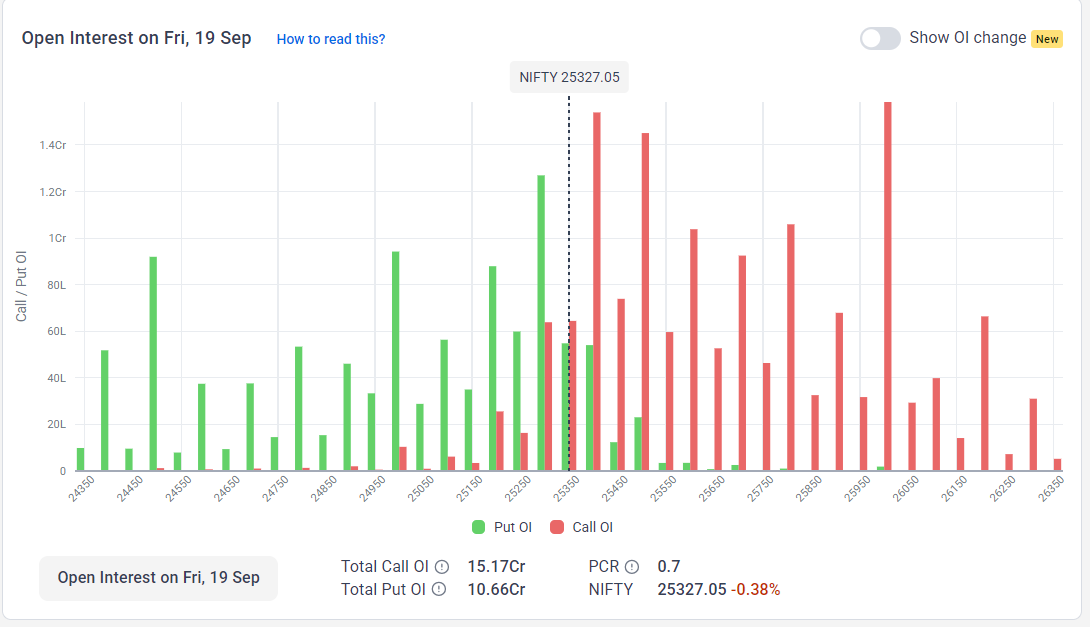
For 23rd September 2025 Expiry (Weekly Setup)

  • Support at 25,300: Around 0.27 Cr puts vs. 0.63 Cr calls. This level won’t break easily on Monday, but if it does, the market may slide towards 25,200.
  • Strong support at 25,000: With 87L puts vs. 25L calls, traders believe the market will hold this level in the short term.
  • No major call buildup between 24,500 – 25,300: This suggests FIIs & DIIs are not expecting a strong bearish move.
  • Resistance at 25,400: With 1.54 Cr calls vs. 54L puts, this is the first hurdle for the bulls.
  • Resistance at 25,500: With 1.45 Cr calls vs. 23L puts, a key barrier.
  • Major resistance at 26,000: With 1.58 Cr calls vs. only 1.89L puts, this is where bears have built heavy positions, expecting the market not to cross this level easily.


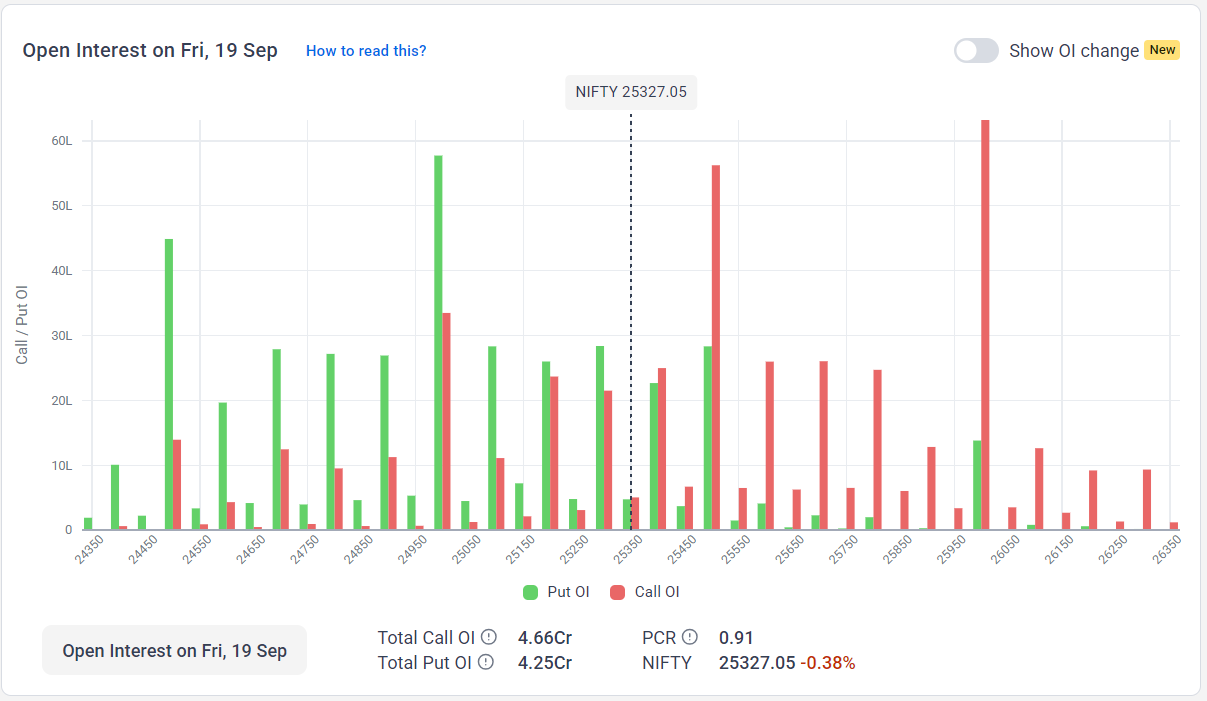
For 30th September 2025 Expiry (Monthly Setup)

  • Support at 25,000: With 57L puts vs. 33L calls, this level is well protected by put writers.
  • Resistance at 25,500: With 56L calls vs. 28L puts, but given the bullish structure, this level can be breached if momentum continues.
  • Major resistance at 26,000: With 63L calls vs. 13L puts, this remains a critical ceiling for the monthly trend.

Market Outlook Based on OI Data

  1. Short-Term (22nd–23rd Sep) – The market may remain sideways to slightly bearish ahead of the weekly expiry, mostly consolidating below 25,500.
  2. Gap Moves – Any gap-up or gap-down opening could trigger momentum either way (bulls or bears).
  3. Bullish Setup – A breakout above 25,400 can fuel bullish momentum, with potential to test 25,500–25,680 levels.
  4. Bearish Setup – If the market closes or trades below 25,300, a retest of 25,000 is likely. A decisive break of 25,000 could extend weakness towards 24,500.

Sentiment Indicators

  • PCR Ratio: 0.8 – This indicates more call writing than put writing, showing short-term bearish sentiment. If PCR rises above 1.0, it would reflect a shift towards bullish positioning.
  • India VIX: 10 – Low volatility, no signs of panic. Investors remain calm, suggesting the market may trade in a controlled range without sharp whipsaws.

How to Take Positions in the Coming Week

1. Futures Trading Setup

  • Long Setup: Go long on Nifty if it closes above 25,400 or forms a strong bullish candle. The immediate upside target will be around 25,700.
  • Short Setup: Go short if Nifty closes below 25,300. In that case, expect a move down to 25,000, as the index may retest this crucial support level.


2. Options Buying Strategy

  • Put Buying (Bearish Setup):
    If Nifty breaks the previous day’s low within the first 15 minutes of trade, buy an ATM 25,300 Put.

Target: 25,200 (same-day move)


Returns: Aim for 60–80 points on Nifty (20%+ return on capital).


Important: Do not carry this position overnight; exit within the same session.


  • Call Buying (Bullish Setup):
    If Nifty opens with a gap-up and trades above 25,350, or if the market starts with a strong bullish bar, buy an ATM Call for intraday trading.

Exit Strategy: Book profits after the first upward move, ideally capturing 50–60 points on Nifty.


Important: Do not hold overnight, as theta decay will reduce option value.


Disclaimer: This content is for educational purposes only and not financial advice. Options trading carries risk. Consult a registered advisor before making any trades. We are not liable for any losses


NIFTY_2025-09-07_15-33-18

Nifty 50 Trade Setup for September 8, 2025 & Next Week – Key Things to Know Before Market Opens

Nifty 50 Trade Setup for September 8, 2025 & Next Week – Key Things to Know Before Market Opens

Technical View on Nifty 50 for 8 Sep

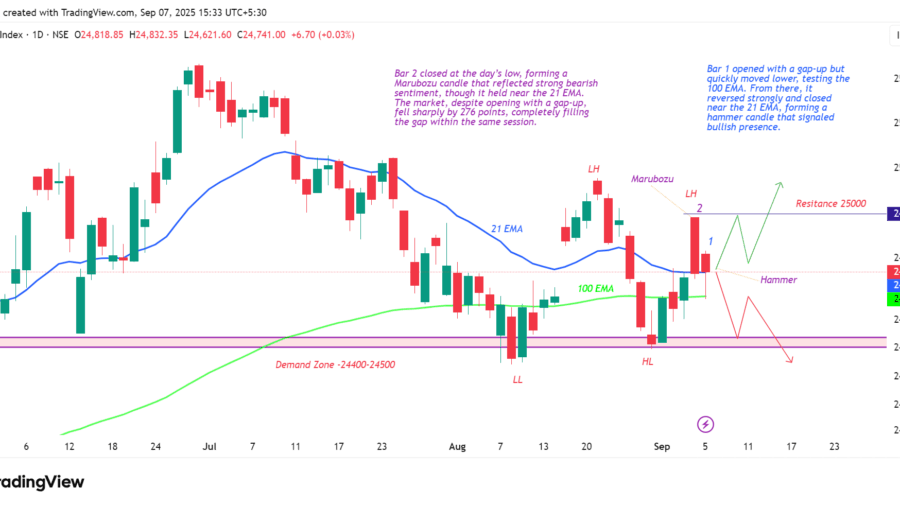
  1. Nifty closed at 24,741 on Friday. The session began with a gap-up opening but quickly slipped lower, testing the 100 EMA. From there, the index staged a strong reversal and ended near the 21 EMA, forming a hammer candle, which reflects a presence of buying interest and potential bullish sentiment.
  2. On the daily chart, the index is forming a Lower High – Higher Low – Lower Low (LH–HL–LL) pattern, which indicates weakness. This structure suggests that the market may once again test the 24,500 zone in the near term.
  3. If the index opens or trades above 24,800, it would break the previous day’s high, turning the short-term trend bullish. In this case, long positions can be considered with an immediate target of 25,000.

On the other hand, if the market opens gap-down below 24,600 and sustains under it, short-term bearish momentum may emerge. In such a scenario, short positions can be taken with downside targets of 24,600 and 24,500.

Article content

Open Interest Analysis – Nifty 50

Resistance Levels (Above 24,750)

  1. 24,800 – Around 1.14 Cr calls vs. 62L puts, indicating a minor resistance.
  2. 24,900 – Nearly 1.3 Cr calls vs. 22L puts, making this the second resistance level.
  3. 25,000 – A heavy buildup of 1.87 Cr calls against just 15L puts, establishing this as a major resistance zone.

Support Levels

  1. 24,700 – Around 76L puts vs. 60L calls. The difference is small, so this level can be breached quickly depending on Monday’s opening trend.
  2. 24,600 – With 98L puts vs. 26L calls, this is the second support zone.
  3. 24,500 – Strong buildup of 1.24 Cr puts vs. 27.88L calls, making it the major support level for the market.

Key Zones for Monday & Tuesday

  • Support Zones: S1: 24,500 | S2: 24,600 | S3: 24,700
  • Resistance Zones: R1: 24,800 | R2: 24,900 | R3: 25,000
Article content

Possible Market Scenarios

Bullish Setup:

  • If Nifty opens flat or gap-up and sustains above 24,800, it may attempt to test 24,900.
  • A strong breakout above 24,900 could push the index toward 25,000, but this zone carries heavy call writing and will act as a major hurdle.
  • Sustained close above 25,000 can shift sentiment toward 25,200–25,300 levels.

Bearish Setup:

  • If Nifty opens weak or slips below 24,700, the next immediate support lies at 24,600.
  • A break below 24,600 may accelerate selling toward the 24,500 major support.
  • Breach of 24,500 could extend downside toward 24,200–24,000 in the short term.

Put-Call Ratio (PCR)

The current PCR stands at 0.8, which means there are more calls written than puts. Typically:

  • PCR below 1 signals bearish to neutral sentiment as call writers dominate, showing traders expect limited upside.
  • PCR above 1 indicates bullish bias as more puts are written, reflecting confidence in market support.

At 0.8, the sentiment leans bearish to sideways, with resistance levels likely to hold unless there is strong buying momentum.


India VIX – Market Volatility Gauge

  • Current India VIX: 10.8, which is at the lower end of the normal range (10–20).
  • A low VIX reflects calmness and low volatility, meaning option premiums are cheaper.
  • However, very low VIX levels often precede sharp moves in either direction if unexpected events or triggers occur.

In simple terms: the market is currently stable, but traders should be cautious of sudden volatility spikes.


Market Outlook

The index closed at 24,741 on Friday. For the upcoming week, especially with Monday trade and Tuesday’s expiry, these levels will be crucial:

  • Bullish Scenario: If Nifty trades above 24,800 or opens with a gap-up, buyers may push it toward 24,900–25,000. A close above 25,000 could open room for 25,200–25,300.
  • Bearish Scenario: If Nifty opens gap-down below 24,600 and sustains, weakness may extend toward 24,500. A break below 24,500 can accelerate selling pressure toward 24,200–24,000.

Trading Plan

  • Long Entry: Above 24,800 with confirmation; target 24,900–25,000.
  • Short Entry: Below 24,600 with confirmation; target 24,500 and then 24,200 if broken.

FII and DII data Analysis

Cash Market (01–05 Sep 2025)

  • FIIs (Foreign Institutional Investors): Net sellers every day, with a total of -₹5,666 Cr (Month till date). Indicates FIIs are reducing exposure and showing bearish bias.
  • DIIs (Domestic Institutional Investors): Net buyers consistently, with a total of +₹13,444 Cr (Month till date). DIIs are providing support and absorbing FII selling pressure.

Conclusion: FIIs are bearish in the cash market, but DIIs are counterbalancing with strong buying.

Article content
Article content

Index Futures (FIIs)

  • FIIs are net sellers of -₹3,009 Cr (Month till date).
  • Consistently reducing long positions or building short positions in futures.
  • This adds to their bearish stance.

Index Options (FIIs)

  • FIIs are net buyers of +₹26,489 Cr (Month till date).
  • On daily data, they are alternating between heavy buying and selling, but overall leaning bullish on options.
  • This could mean they are hedging shorts in cash/futures with long positions in calls or using spreads.

Market View

  1. FII Positioning: Bearish in cash and futures → they expect downside or at least limited upside.
  2. DII Positioning: Strong buying → they are supporting the market, possibly expecting stability or accumulation at lower levels.
  3. Options Activity: FIIs buying in index options → indicates hedging or preparing for volatility.

Possible Market Outlook

  • Short-Term (1 week): Market may remain under pressure due to FII selling, especially if Nifty trades below 24,400.
  • Support Levels: 24,400 and 25,000 (where DIIs might continue to provide support).
  • Upside Risk: If Nifty crosses 24,800–25,000, short covering from FIIs in futures can trigger a sharp rally.

Trade Setup For Monday and Tuesday of 8 Sep 2025

1.Long Futures with Hedge Strategy

  • Take a long position in Nifty September 30 Futures if the market trades above 24,800.
  • Hedge this position by buying a Nifty 24,700 Put option (09 Sep expiry).
  • Stop Loss for the futures trade is at 24,650.
  • Target for the upside move is 25,000.

This setup is effective because if Nifty moves above 24,800, it confirms short-term bullish momentum, and the market is likely to extend toward 25,000. At the same time, the purchased 24,700 Put option acts as insurance, limiting potential downside risk if the market fails to hold the breakout and falls back.

By combining the futures position (for directional exposure) with a near-term protective put, you create a hedged long that balances profit potential with risk control.

Article content

2.Short Futures with Hedge Strategy

  • Take a short position in Nifty September 30 Futures if the market trades below 24,600.
  • Hedge this position by buying a 24,700 Call option (09 Sep expiry).
  • Keep a Stop Loss at 24,750.
  • The downside target is 24,400.

This setup works because if Nifty breaks below 24,600, it indicates weakness and opens room for further decline toward 24,400. The purchased 24,700 Call acts as insurance against a sudden bounce, thereby reducing the overall risk.

Article content

3.Naked Call Option Strategy

  • If Nifty trades above 24800, buy 24600 CE or 24700 CE. These ITM calls hold intrinsic value and are better suited for overnight positions.
  • For intraday trades, you may buy 24900 CE or 24500 CE as cheaper OTM calls. These can give quick returns if momentum continues, but are not suitable for holding overnight.
  • Note: Avoid ATM and far OTM calls for overnight because they decay quickly in value and require a strong, immediate move to become profitable. ITM calls provide safer and more reliable exposure.

4.Naked Put Option Strategy

  • If Nifty falls below 24600, buy 24800 PE for holding overnight, as ITM puts carry intrinsic value and offer safer positioning.
  • For intraday trades, you can look at 24500 PE, since it has the highest OI and may move faster with momentum.
  • Note: Avoid holding ATM or OTM puts overnight because they have no intrinsic value, and theta decay will quickly erode the premium if the market moves against you. Always factor in risk before taking the trade.

5.Bull Call Spread

If Nifty trades above 24800, initiate a Bull Call Spread with the following setup:

  • Buy 24600 CE (9th Sep expiry) at ₹197
  • Sell 25000 CE (9th Sep expiry) at ₹16.1

This strategy benefits from an upward move, with an immediate target near 24800. It helps capture the upside while keeping risk controlled.

Article content

6.Bear Call Spread Strategy in NIFTY

A Bear Call Spread is used when you expect limited downside or range-bound bearish movement. It involves selling a lower strike Call and buying a higher strike Call of the same expiry.

Sell 24700 CE and Buy 24900 CE

Why use it: Generates income when the market stays below the short strike, with limited risk. It is suitable if NIFTY trades below 24,600, with a possible target towards 24,400.

Article content

7.Long Straddle Strategy

The Long Straddle is an options strategy ideal when high volatility is expected in the market. It involves buying both a Call and a Put option at the same strike price and expiry.

Example:

  • Buy 24700 CE (Call Option)
  • Buy 24700 PE (Put Option)
  • Expiry: 9th September
  • Total Cost (Premium Paid): ₹13,009

Key Details:

  • Maximum Profit: Unlimited (if NIFTY moves sharply in either direction)
  • Maximum Loss: Limited to the premium paid (₹13,009)
  • Breakeven Points: 24,527 (downside) & 24,873 (upside)

Why Use This Strategy: With expiry on Tuesday, the market is expected to see fast and significant moves on Monday and Tuesday. The Long Straddle benefits from strong moves in either direction, making it ideal for high volatility days.

Article content

8.Long Strangle Strategy

The Long Strangle is an options strategy designed for situations where a sharp market move is expected in either direction. It involves buying an Out-of-the-Money Call and an Out-of-the-Money Put with the same expiry.

Example:

  • Buy 24850 CE at ₹47.3
  • Buy 24650 PE at ₹38.5
  • Expiry: 9th September
  • Total Cost (Premium Paid): ₹6,435

Key Details:

  • Maximum Profit: Unlimited (if NIFTY moves strongly in either direction)
  • Maximum Loss: Limited to the premium paid (₹6,435)
  • Breakeven Points: 24,564 (downside) & 24,936 (upside)

Why Use This Strategy: This strategy is ideal when the market is expected to be volatile and a significant move is likely. It works well during expiry weeks, major events, or uncertain market conditions, allowing you to profit from movement in any direction.

Article content

Disclaimer: This content is for educational purposes only and not financial advice. Options trading carries risk. Consult a registered advisor before making any trades. We are not liable for any losses.